

10 Print-on-Demand Niches That Sell in 2026
Not a magic list · a map. Ten POD niches with steady demand in 2026, why each one converts, and the design styles that win inside them.
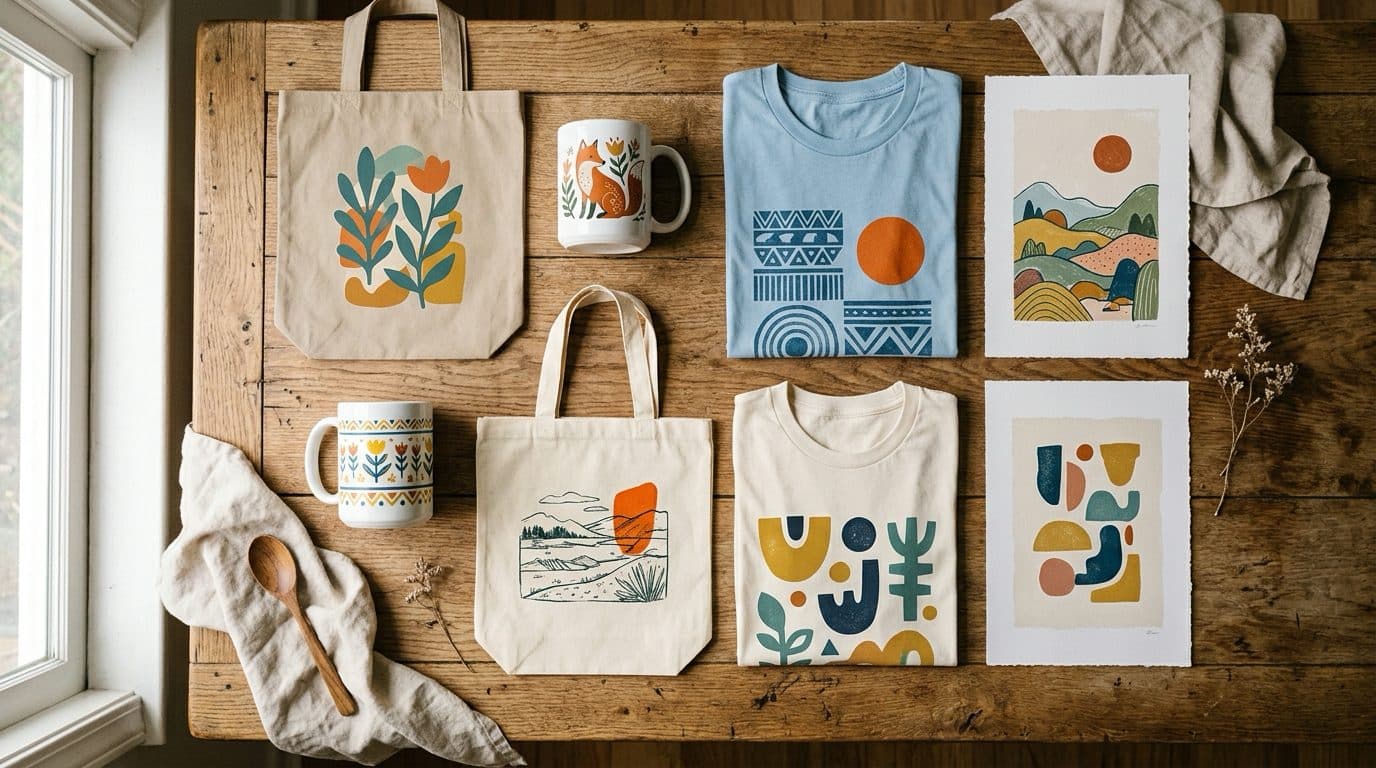
Every niche list promises gold and delivers "pets, fitness, motivation." So let me be specific about what I actually see converting this year, and — more useful — why each lane works. A niche isn't a keyword; it's a person with a wall, a wardrobe, or a gift to buy.
The evergreen four
1. Pet parents. Still the king, but generic paws are dead — breed-specific humor and memorial pieces carry it. I broke down which animal designs actually sell; short version: specificity beats adorable. Start in the animal collection.
2. Professions with identity. Nurses, teachers, electricians — jobs people wear like a team jersey. The winning tone is in-joke, not inspirational.
3. Kitchen & coffee. Mugs are the impulse gift of last resort, which makes food & drink designs a permanent lane. Sarcasm about caffeine outsells sincerity about brunch, every year.
4. Family & matching sets. Reunions, "first Christmas as…", grandparent pride. Buyers order four shirts at once — the margins add up fast.
The seasonal engine
5. Christmas, obviously — but the sellers who win start pressing holiday designs in summer, not November. 6. The full holiday calendar beyond December: Halloween, Easter, Valentine's — the holidays collection exists because these spikes are short, sharp and predictable.
The 2026-flavored lanes
7. Retro maximalism. Loud, saturated, 70s-leaning graphics — the multicolor aesthetic — keep beating minimalism on apparel this year. 8. Hobby tribes: gardening, fishing, crochet; small audiences, fierce loyalty. 9. Local pride: city and small-town designs with actual landmarks, not just a name in a circle. 10. Milestones: graduations, retirements, "survived my first year of…" — life events people *have* to buy for.
How to actually use this list
Pick one lane, not four. List ten designs in it, watch thirty days of data, then double down or move on. A focused storefront reads as an expert; a scattered one reads as a dropshipper — and buyers can smell the difference.