

How to Read a Cross Stitch Chart Without Losing Your Mind
Grids, symbols, floss keys · a cross stitch chart looks like sheet music until someone shows you the trick. Start at the center, park your threads, and breathe.
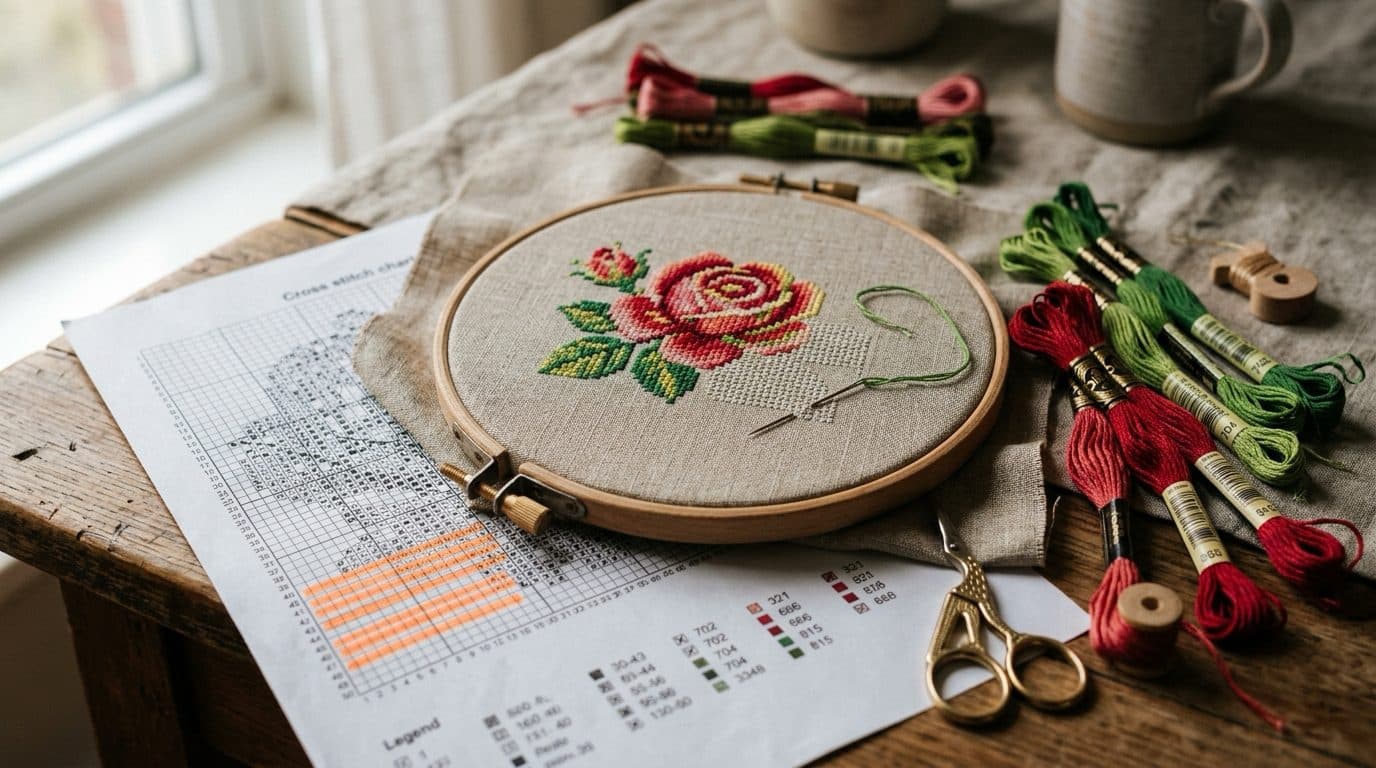
My aunt stitched entire tablecloths while watching television, never once glancing at a chart like it was a puzzle. When I finally tried, I stared at the grid of tiny symbols for twenty minutes and put it back in the drawer. It took an embarrassingly long time to learn the thing she never bothered to say out loud: you don't read a chart. You read one ten-by-ten square at a time.
The grid is the fabric
Every square on a cross stitch chart is one stitch on your aida. The bold lines mark every tenth row — those exist purely so you can count in chunks instead of squares. Find the little arrows on the chart edges; where they meet is your center. Fold your fabric in quarters, pinch, and that crease is the same center. Start there, always. Starting in a corner is how kits end up crooked and abandoned.
Symbols are just paint-by-numbers
Each symbol maps to one floss color in the key — a filled circle might be DMC 321 red, a tiny triangle the darker 815. The chart doesn't care about the picture; it cares about the map. Work one color in a small region, then switch. Some stitchers park their threads at the edge of a color block instead of finishing off — it keeps the back tidier than you'd expect and saves a genuinely silly amount of rethreading.
Three habits that save projects
Highlight completed rows on a printed copy (or use a PDF app with a highlighter — our patterns ship as printable PDFs for exactly this). Count twice before long runs of a single color; one missed square in row four becomes a visible diagonal scar by row forty. And stop mid-row when you're tired, not mid-color-change — future-you will thank past-you at the next sitting.
Pick a forgiving first chart
Start with something under 100×100 stitches and fewer than fifteen colors — a snarky quote, a small motif, a holiday ornament you can finish before the holiday actually arrives. Finishing your first small piece teaches you more than fighting a masterpiece for a year ever will.