Cricut SVG Cutting: Tips for Clean, Crisp Cuts
Torn vinyl and ragged cardstock are fixable. Blade care, mat honesty, test cuts and file choice · the habits behind consistently clean Cricut cuts.
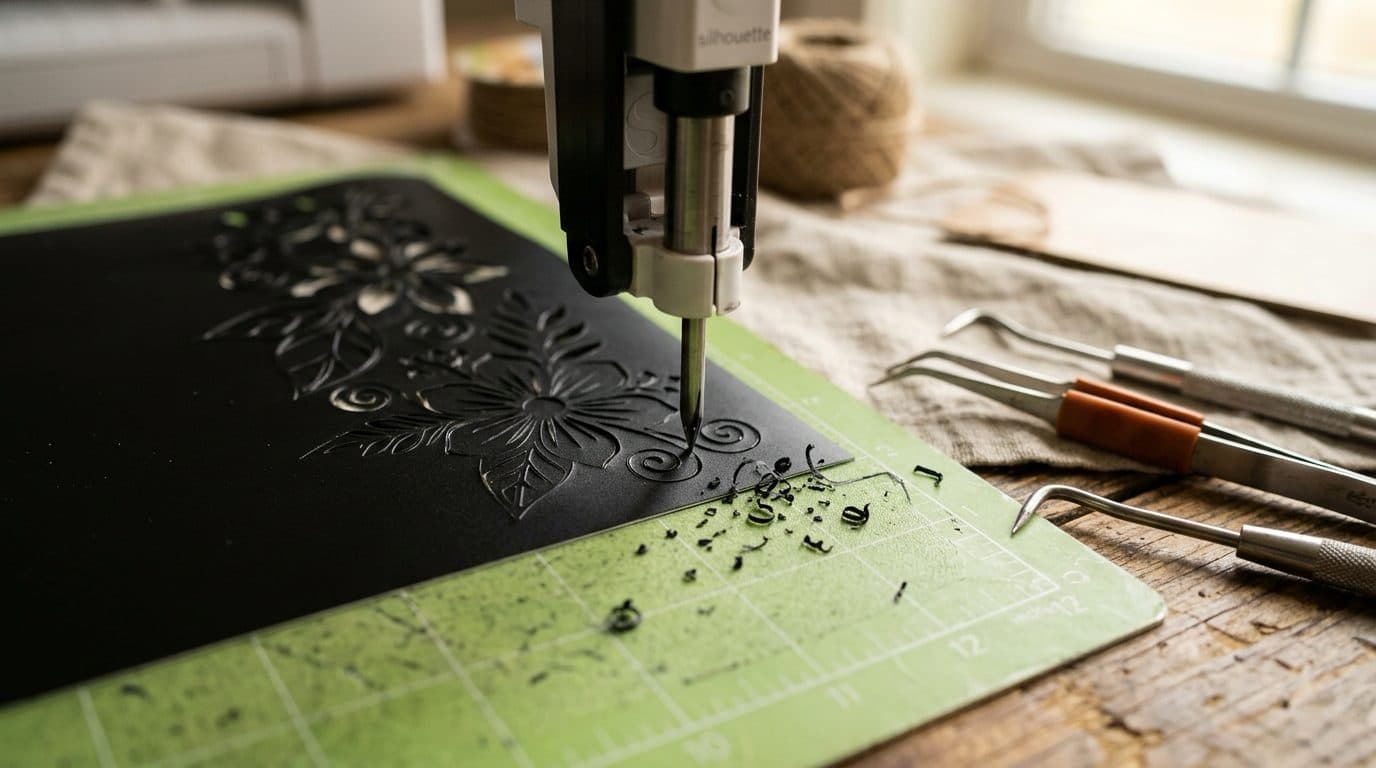
A torn cut halfway through a two-hour project taught me more than any tutorial. The machine wasn't broken. My mat was tired, my blade was six months old, and my file had strokes thinner than a human hair. Clean cuts are boring habits, not luck.
The blade is a consumable, not a purchase
Fine-point blades dull quietly — the first symptom is vinyl corners lifting instead of releasing. Swap the blade every few months of regular use, and keep a dedicated blade for paper; cardstock chews edges faster than vinyl ever will. A ball of aluminum foil "sharpens" nothing, whatever the Facebook groups say. It cleans residue; that's still worth doing.
Be honest about your mat
If you can lay material down and lift it with one finger, the mat is done. A shifting sheet turns perfect settings into ragged edges. Wash mats with dish soap and lukewarm water, air-dry face up, and demote old ones to "practice" instead of pretending.
Test cut, always, on the actual material
A one-inch star in the corner costs thirty seconds. Material settings differ between "vinyl" and "iron-on" more than people expect — pressure is nearly double — and every brand of cardstock is its own animal. Thirty seconds against two hours: easy math.
Half your cut quality is the file
Confident silhouettes with clean interior paths weed in one sitting; hairline details generate confetti. This is exactly why cut-focused collections lean on bold shapes — browse the icons collection or the line-art side of the animal designs and notice how few tiny islands there are. That's deliberate. (And make sure you're cutting an actual SVG, not a PNG trace — the format matters.)
When a cut still fails
Check order: blade → mat → setting → file, in that sequence. It's almost never the machine. And keep the failed piece; ragged edges make honest test material for the next blade you're breaking in.