Getting Started with Sublimation: A Beginner's Guide
The gear you actually need, the settings that work, and the first project worth pressing · a no-fluff guide to starting sublimation printing.
I ruined my first three mugs. Not because sublimation is hard — because every guide I read listed forty products and zero opinions. So here's the opinionated version: what you need, what you can skip, and the first project that won't break your heart.
The short shopping list
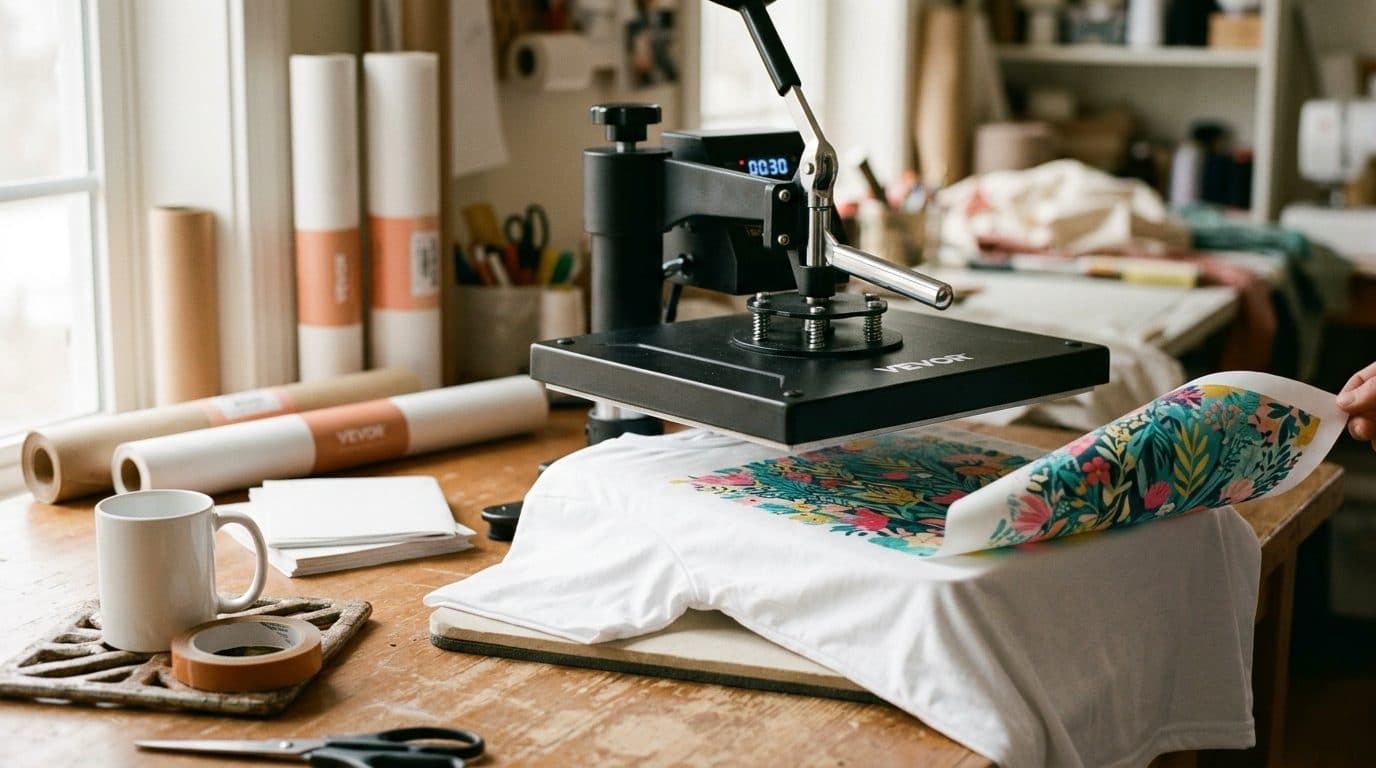
A sublimation printer (a converted Epson EcoTank is the classic budget path), sublimation ink and paper, heat-resistant tape, and a press. That's it to start. Blanks matter more than people admit: the ink only bonds with polyester, so your shirt needs 65% poly or better and your mug needs an actual sublimation coating. A "cheap white mug" from the supermarket will press to nothing — ask me how I know.
Settings that actually work
Shirts: 385°F for 60 seconds, medium-firm pressure. Mugs in a mug press: around 375°F for 4–5 minutes. Every press lies a little, so a $10 pack of heat-test strips saves you a week of guessing. Tape the transfer tight — the ghosting you see in bad prints is usually paper shifting during those first seconds.
Your first project: a mug, not a shirt
Mugs are cheap, forgiving, and the coating makes colors sing. Pick something from the food & drink collection — coffee jokes were born for this — or, if the calendar's right, a Christmas design; ornament-and-mug season is where most makers press their first sale.
Pick files built for the process
Sublimation flattens subtle pastels and rewards saturated mid-tones. Designs drawn for the medium — like the ones in our multicolor collection — survive the press; screen-pretty gradients often don't. If a print comes out muted anyway, the culprit is almost always fabric content or temperature: I wrote a whole post on why some prints pop and others wash out.
The mistakes everyone makes once
Printing without mirroring the image. Pressing on a dusty platen. Peeling the paper slowly like a sticker (rip it fast, hot). None of these are fatal — a wasted blank costs a dollar or two, and the fourth mug is the one you'll photograph.